Messages and Themes

In most forms of literature, rebel characters are considered the good guys. What they are fighting for is perceived by the audience as noble or otherwise admirable. This is not always the case, however. An example of a villainous rebel protagonist is Satan in the epic poem Paradise Lost by John Milton. In terms of historical religious context, Satan is objectively an evil character. However, he is still able to express the author's intended messages which have to do with the consequences of rebellion and his personal religious ideas (which reject the notion of predestination).
Another example of a villainous rebel is Vegeta from Dragon Ball Z. For a good portion of the first part of the series, he was seen as the main villain. However, he's later shown to be a pawn by Frieza, who is an even greater threat than Vegeta. In this arc, Vegeta rebels against Frieza for selfish reasons and to settle a personal vendetta. However, because he is rebelling against a greater threat to our heroes, the audience is able to sympathize with him which allows him to be redeemed later in the series. He expresses broader themes of strength and humility during this latter section of the series.
Rebels, like most character arch types, express the story's messages and themes through their actions and interactions with other characters and their environments. Rebels can be rebels while also taking up many other primary roles in literature. They can be protagonists, antagonists, anti-heroes, redeemed villains, lancers, paragons, etc. The only common trait they all must share is that they are rebelling for something as well as against something.
For example, the Lorax from Dr. Suess' The Lorax is a rebel. He is rebelling against the Onceler who represents themes of greed and betrayal. If one views the Onceler as the protagonist, the Lorax can be considered a lancer or antagonist even though his goals are noble. The Lorax is used to express Dr. Suess' ideas about environmental awareness and corporate greed.

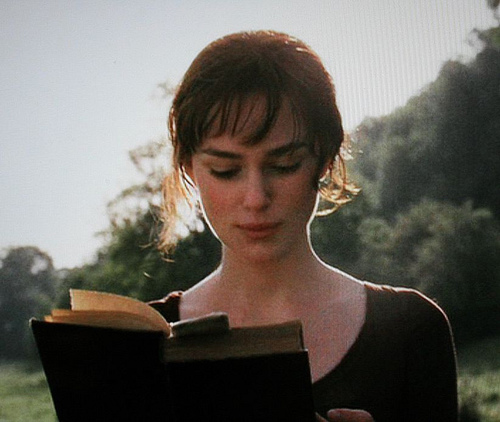
Elizabeth Bennet
Pride and Prejudice
"I am only resolved to act in that manner, which will, in my own opinion, constitute my happiness, without reference to you, or to any person so wholly unconnected with me."
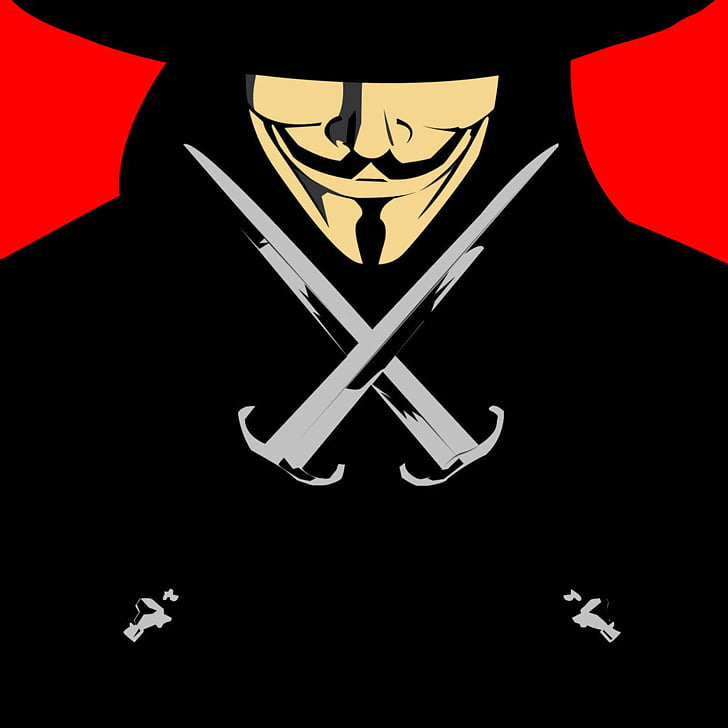
V
V for Vendetta
"People should not be afraid of their government, government should be afraid of their people."
Rebelling Against:
The Government

A very common trope in fictional literature, particularly dystopian fiction, is rebelling against the government. Themes that occur from these stories generally deal with the authors' ideas of bigotry, political corruption, and oppression. As most societies need some form of government to thrive and to avoid falling into anarchy, these are often issues the common reader can identify with.
Rebelling against the government are huge plot points in the Star Wars franchise as well as books such as The Hunger Games, The Giver, Divergent, V for Vendetta, and 1984. The governments in these stories are often exaggerated versions of real governments. The author does this to highlight and criticize what they perceive to be real political issues.
An interesting example of this is George Orwell's 1984. The government in this novel (known as "The Party") is a totalitarian regime. When Orwell was portraying this government, he took inspiration from both Hitler's extreme socialist ideologies and Stalin's extreme communist principles. Despite Hitler and Stalin falling on opposite ends of the political spectrum, Orwell saw them as dangerously similar. Orwell used 1984 as a way to criticize the deep and troubling flaws of both political systems. So while the government of 1984 is fictional, the themes and messages that are communicated in the book were real and genuine threats.
Another specific example of a literary rebel fighting against the government is Alan Moore's V, in V for Vendetta. The graphic novel explores the relationship between freedom and anarchy. Moore identifies as an anarchist and projects these ideals onto the main characters of his books. V is a rebel who is fighting for freedom which Moore believes can only be achieved through anarchy. Moore sends this message by showing how V interacts with his fictional government as well as the main "love interest." Moore doesn't romanticize rebellion and anarchy, but promotes his belief that they are necessary for absolute freedom.
Here are some themes that have shown up in stories about rebelling against the government:
1984
- Do not thoughtlessly conform
- Subvert oppressive authority
Divergent
- Identity should not be determined by one's government
- Accept other's differences
Other Forms of Authority
Star Wars
- Never back down, despite overwhelming odds
- Democracy over tyranny
The Hunger Games
- If the rules are rigged, change the game
- Human lives are not pawns to be sacrificed

Rebelling against the government and rebelling against authority go together like rectangles and squares. Rebelling against the government is a specific form of rebelling against authority, but not all rebellions against authority have to do with government entities. Some other common forms of authorities rebelled against in literature are parents, mentors, and gods.
Both the classic novels Paradise Lost by John Milton and Journey to the West by Wu Cheng'en have very similar themes when it comes to rebelling against authority. In Paradise Lost, Satan decides to rebel against God because he didn't want to worship God and his Son. During the rebellion, Satan is easily defeated and he and his rebel angels are cast down into hell. In Journey to the West, Sun Wukong rebels against all of heaven due to his impulsiveness and his need to fulfill his boredom. Once the gods and deities realize how much of a problem Wukong actually is, they call upon the Buddha to help take care of him. The Buddha then punishes Wukong by trapping him under a mountain for 500 years. Both of these stories send messages about the severe consequences of rebelling against authority.
Another example of rebelling against authority is found in Matilda by Roald Dahl. Matilda rebels against her parents and her principal in both subtle and striking ways: working to educate herself despite her parent's discouragement and driving out her evil principal using her superpowers. Matilda is a very influential character in children's books due to the fact that all adults in a child's life have the potential to appear as an authority figure. Dahl wrote Matilda as a character who questioned how important and indisputable the authority figures in her life were.
Authors of books like these can show children the power of challenging authority and forming independent thought which is a necessary skill to have as kids grow older.
Here are some themes that have shown up in stories about rebelling against authority:
The Story of Eros and Psyche
- Trust the ones you love
- Beware of the green-eyed monster
- Think outside the box
- It's okay to ask for help
Matilda
- Freedom vs confinement
- The importance of intelligence
- The consequences of greed
- Loyalty and standing up for your friends
Society

Authors who write about characters who rebel against society seem to have similar motivations to those who write about rebellions against the government. It is a form of literary criticism. They address and express themes and messages that have to do with the ideas related to "our society isn't perfect and here's why."
One of the most influential authors of all time, Jane Austen, wrote plenty of rebel characters. Her main characters were often female and rejected the status quo of their settings. Austen was a feminist ahead of her time, writing strong female leads even though the society she lived in frowned upon the idea of independent women. Women of the time were expected to hide their intelligence and capability in order to feed men's egos, while at the same time being proper and modest. Not only was Elizabeth Bennet, the lead in one of Austen's most famous novels, Pride and Prejudice a rebel, but so was her author.
A diploma thesis written by Anna Mabbettová describes the concepts of societal bonding and rebellion in compelling ways. She wrote, "As soon as a child is born, it becomes a member of a society... children grow up among other human beings. Thus, through the act of birth, the child becomes a member of a society and must conform to the society's way of life, its rules and standards." (https://is.muni.cz/th/qqfao/Rebellion_-_the_final_version.pdf) She demonstrates that most all readers can relate to the expectations of conforming to society's standards and that many can relate at some level to the desire to rebel. This provides authors the opportunity to share rebellious messages and themes that their readers may have thought about, but never seriously considered.
An extreme example of a character rebelling against society is Dr. Jekyll from Strange Case of Dr. Jekyll and Mr. Hyde by Robert Louis Stevenson. Dr. Jekyll is highly-respected by his community because he is intelligent, wealthy, and cultured. However, he has always struggled with dark desires. Dr. Jekyll wants to continue to be accepted by his community while, at the same time, address his repressed urges. In order to do this, Dr. Jekyll creates a chemical potion that physically changes his body so he can act with less care and decorum while at the same time keeping his good image intact.
Anyone who is even slightly familiar with the story knows that this goes terribly bad for him. However, for a while, Dr. Jekyll is able to rebel against society without actually rebelling against society (and he loves it). Through the character Dr. Jekyll (or characters, depending on how you look at it), Stevenson is able to criticize how appearances aren't everything, and you can never truly know the man behind the metaphorical mask. However, society can trick people into thinking appearances do actually mean everything, to the point where some people are willing to go to extreme lengths to keep them up.
Here are some themes that have shown up in stories about rebelling against society:
Pride and Prejudice
- Femininity and boldness can coexist
- Trust your gut
- Society's perception can be changed
Paper Towns
Authenticity vs artificiality
Coming of age
Genuine human connection
Concepts

This is where things can get a little tricky. Technically everything can be considered a concept so every action one takes can be considered an act of rebellion in one way or another. Even something as simple as the act of breathing can technically be considered a rebellion against the idea of death. However, there are specific examples of characters who rebel against more concrete concepts.
A good example of this is how Peter Pan never grows up (in most versions of the story). He rebels against the concept of time but is more representative of the inevitability of growing up (which makes sense for such an iconic character in children's literature). Under normal circumstances, this could be considered a rebellious act against society. However, Peter Pan (again, in most versions of the story) was never was a member of society, so he can't really rebel against it. This means that the most accurate way to describe Peter Pan's rebellious character is to describe him as rebelling against a concept rather than something that is man-made.
The Phantom Tollbooth by Norton Juster is another really good example of a character rebelling against concepts. Other than the main character Milo, every character in the book is essentially a personification of particular concepts. Tock, a dog with the body of a clock, represents time and loyalty. The Humbug, a superficial humanoid bug, represents the act of speaking and behaving deceptively. As Milo progresses through the book, he has to deal with more antagonistic concepts and rebel against the wishes of others in order to do what's best for this fictional world. Through this, Juster is able to promote themes of overcoming fears and mental obstacles. By making these ideas tangible, these themes are easier for kids to understand.
Here are some themes that have shown up in stories about rebelling against concepts:
Peter Pan
- There's nothing like the imagination of a child
- Family dynamics are important
- Growing up is inevitable
The Phantom Tollbooth
- Appreciation of everyday life
- The importance of common sense
- The value of education
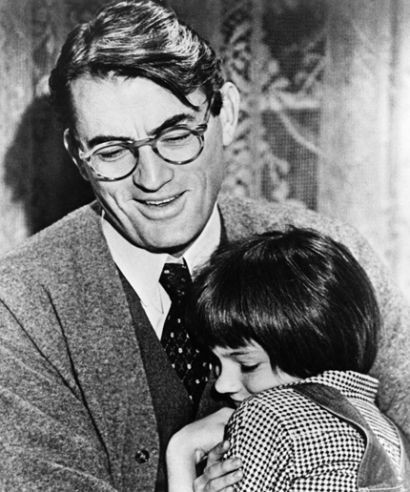
Atticus Finch
To Kill a Mockingbird
"Simply because we were licked a hundred years before we started is no reason for us not to try to win."

Jyn Erso
Rogue One
"Rebellions are built on hope."
Rebelling For:
The motivations behind rebellions differ from story to story. Generally, however, people will either be rebelling for their own self-interest or for the good of their group or society. Why people rebel can also influence the themes and messages that arise.
Self-Interest
Rebellious characters who rebel for themselves aren't necessarily selfish. Some may be rebelling because that's what it takes to survive (like Katniss from The Hunger Games) or because anything other than that act of rebellion does not feel right (like Tris from Divergent). This doesn't make these characters selfish even though their act of rebellion is one that is derived from self-interest. This also allows a lot of growth for these characters later.
That being said, some rebellious characters are selfish. An example is Julia from 1984 who is the love interest of the story's main character, Winston. She rebels against the Party because she wants to explore her sexuality and fulfill her base urges. This doesn't make her a bad person, but it does conflict with Winston's altruistic reasons for rebellion, which have to do with the hope of radically changing the government so that everyone can live happier and freer lives. Despite this, Julia's character is used to address how it is actually very important to not reject one's personal identity.

Aulturistic Purposes
Rebels who rebel for altruistic purposes often appear more heroic than any other kind of rebel. They can choose to rebel for the good of their group, for their friends, or for their society. Their care for others is a heroic trait that promotes themes of selflessness and doing what's right.
The reason characters rebel can change fairly easily. Previously selfish characters can learn the value of their friends and chose to act, not in self-interest, but for the interest of the group (unwilling altruism has the potential to create lancer character types or anti-heroes). The opposite can be true as well. Previously completely selfless characters can learn the value of rebelling for themselves (common in the redeemed villain trope).
To conclude, rebel characters in literature are so much more than leather jacket-wearing chain smokers. They are used by the authors to express deep themes and messages. They can help readers find their identity, their purpose, and understand that nothing is free of consequence. Plus, they're just really fun characters to read about.
